
See how we transformed a basement corner into a cinematic podcast studio for Radio Boise. This guide covers our entire journey, from researching industry-leading aesthetics to solving spatial challenges through creative production design. Explore the full breakdown to learn how we balanced high-end professionalism with the station's authentic, community spirit.
Radio Boise Look from Start to Finish
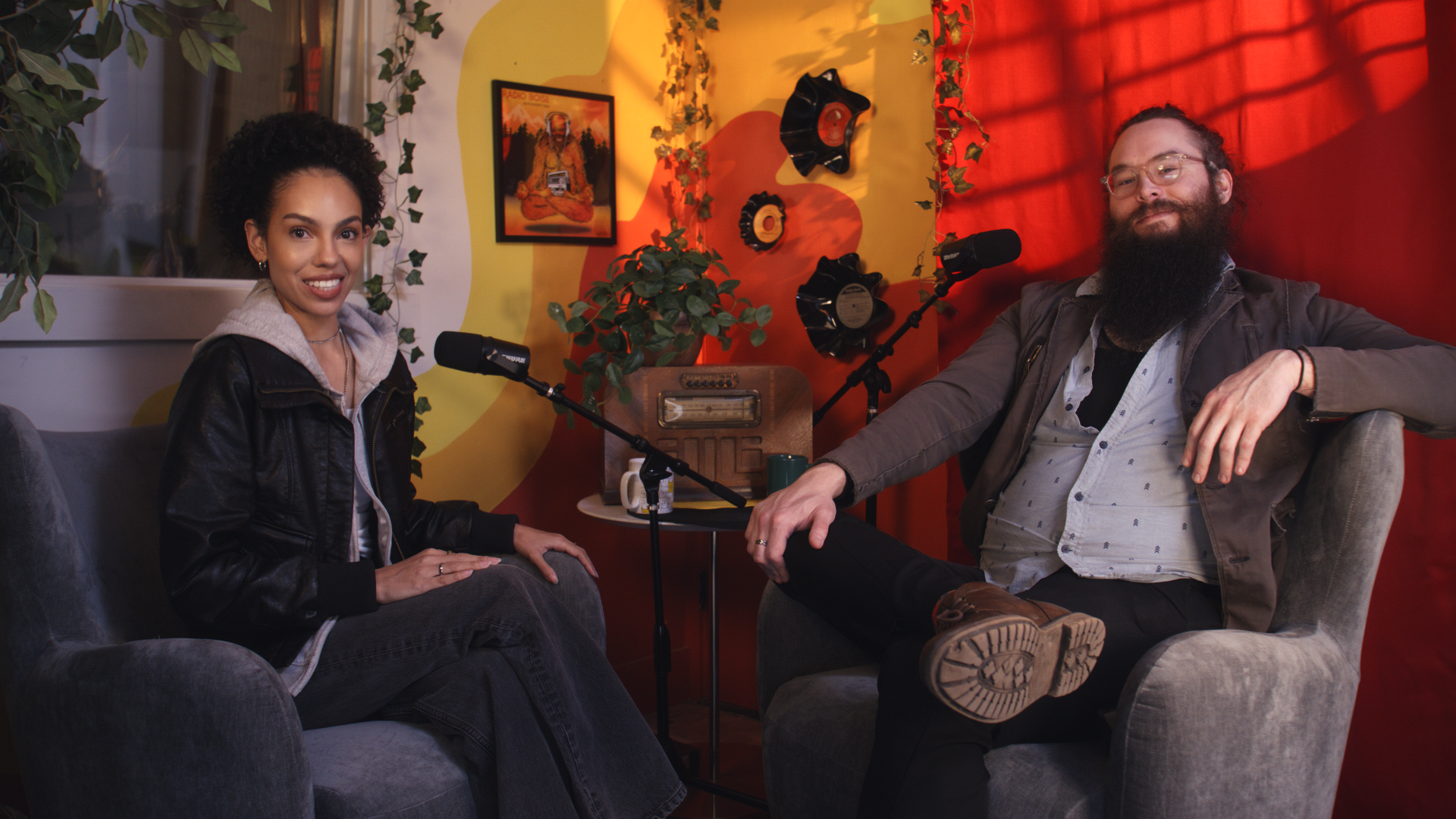
Wide Shot from Radio Boise Shoot
From the beginning, I asked the people at Radio Boise what they wanted the look to be. They did not have much of an idea, but they did want it to look clean and clear for the audience. So, I started looking at other popular podcasts to see what they looked like
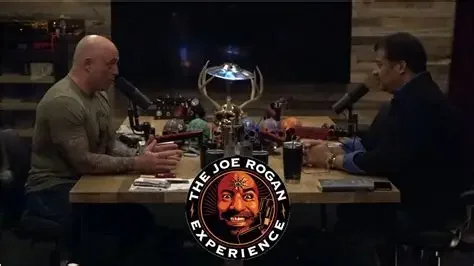
Image from the Joe Rogan Experience Podcast
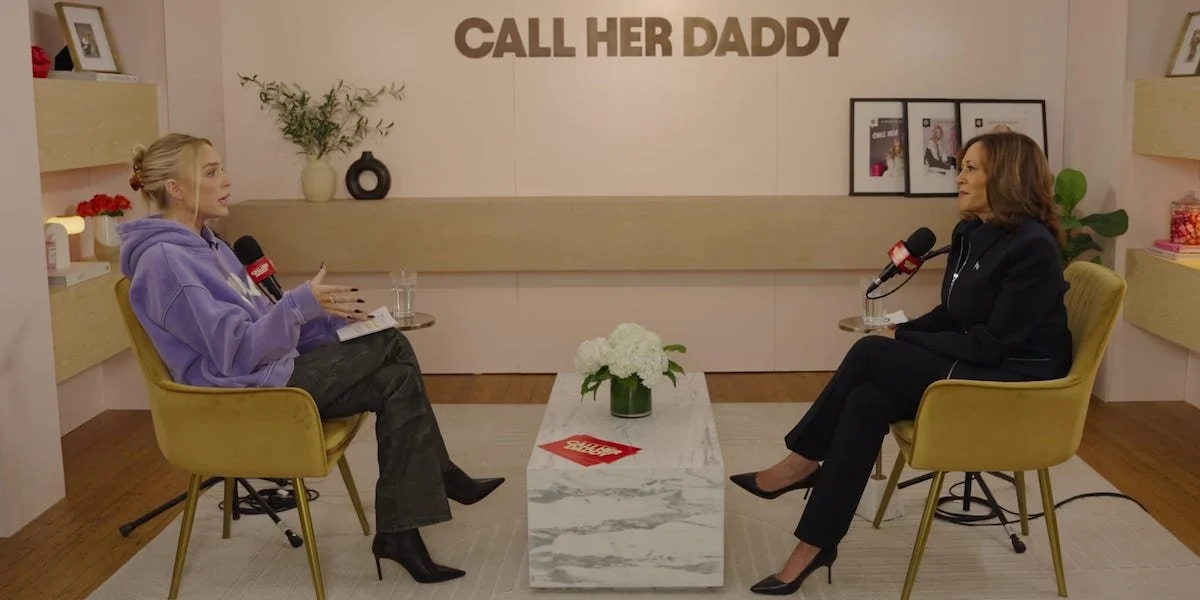
Image from the Call Her Daddy Podcast
I noticed that these podcasts are filmed head-on but show the subjects from the side, intercutting between them with close-up shots. I also saw that they are usually lit quite flatly so that everyone can be seen clearly. Once I had my reference material, I began developing the Radio Boise look. This started with a rough sketch of the lighting and research into how to make this shoot feel distinct and unique
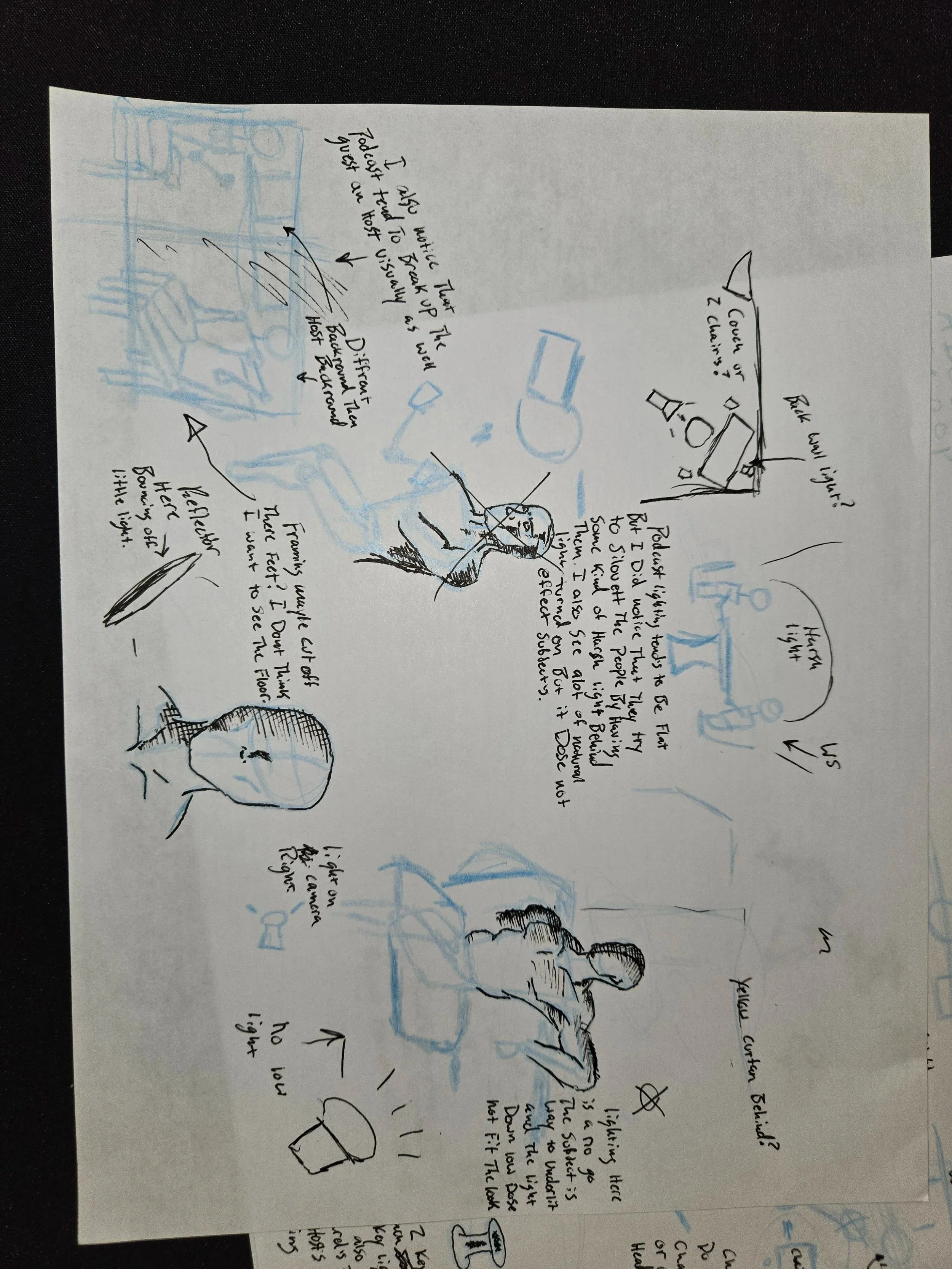
The idea behind the Radio Boise shoot was to keep it corporate and clean, while using lighting to give it a stylized, cinematic look. Because Radio Boise is a scrappy, small station, I didn’t want to lose that identity. However, once I saw the filming location, I realized we had a challenge: we were essentially working in a small corner of the basement. I needed to perform a location scout to figure out how we were going to film in such a confined area.
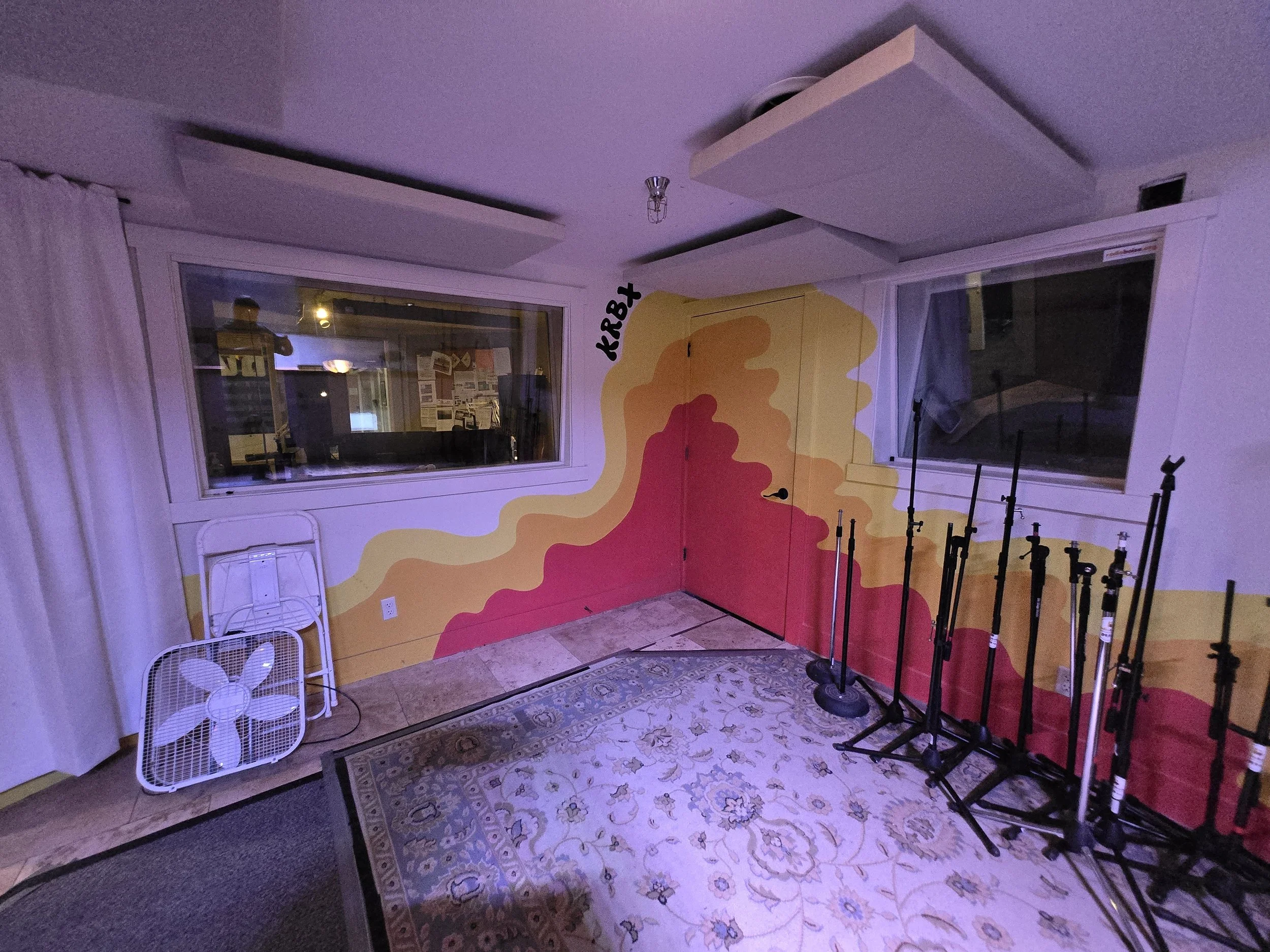
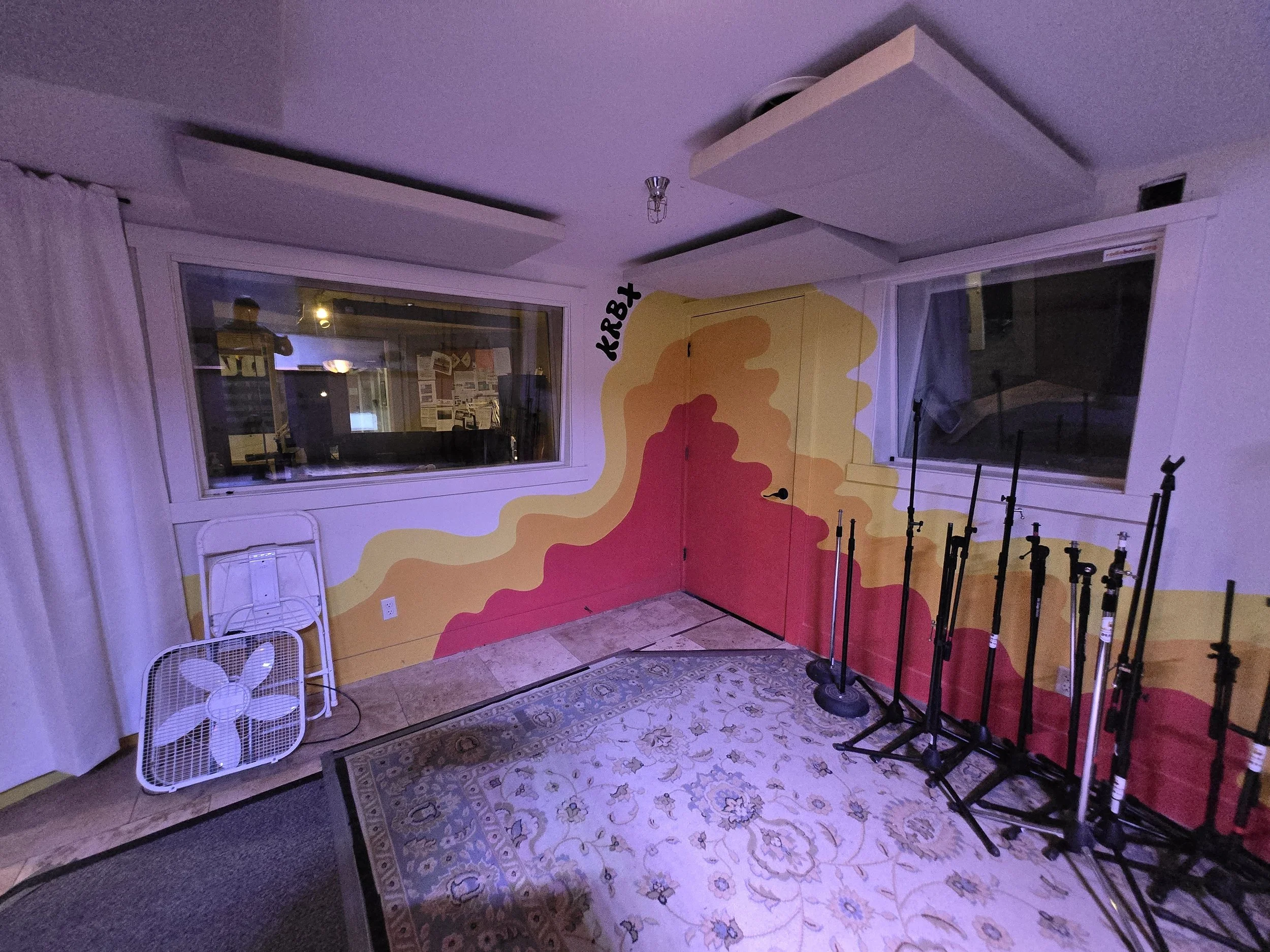
The Corner that we would end up shooting in
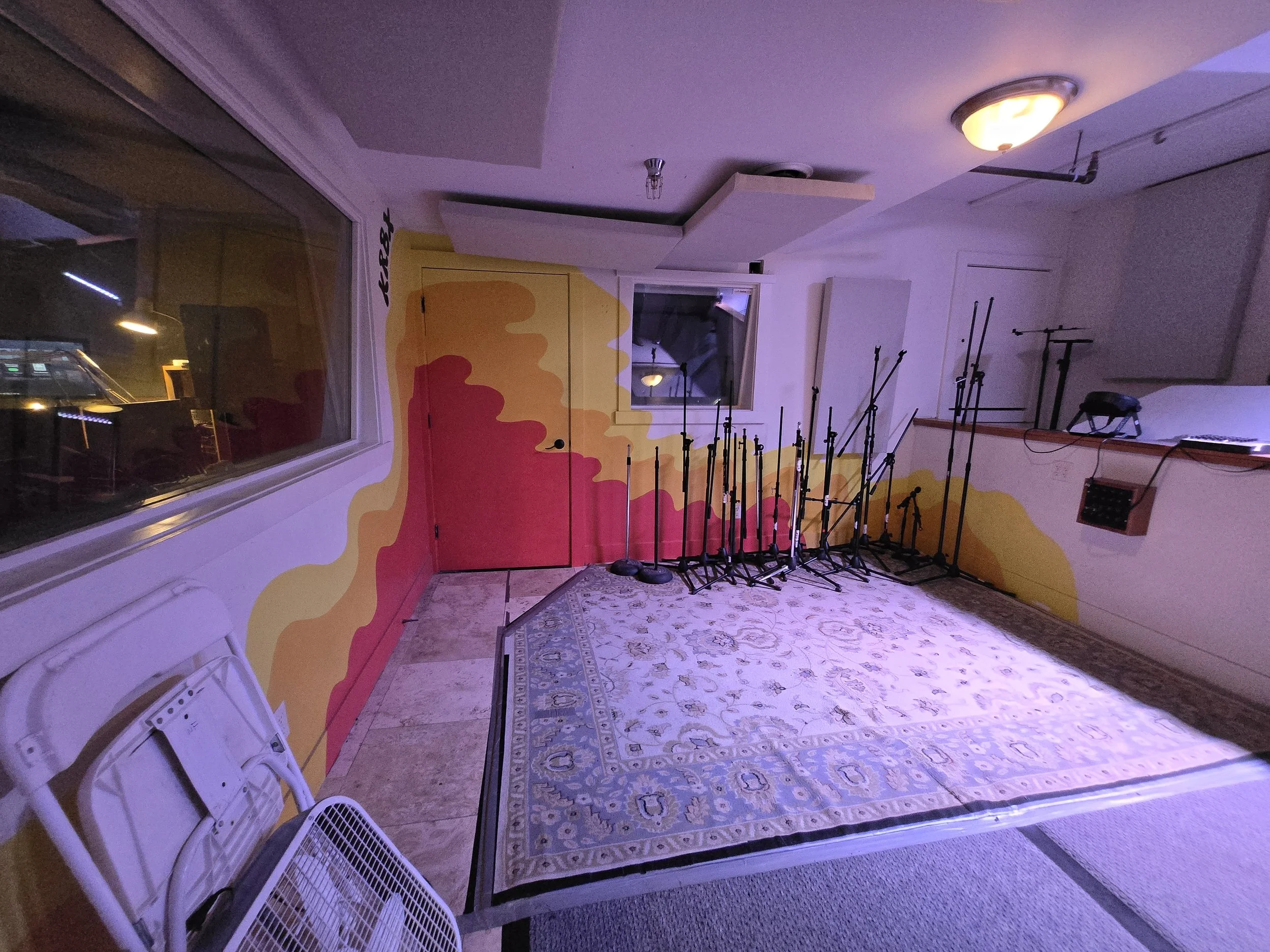
Another view
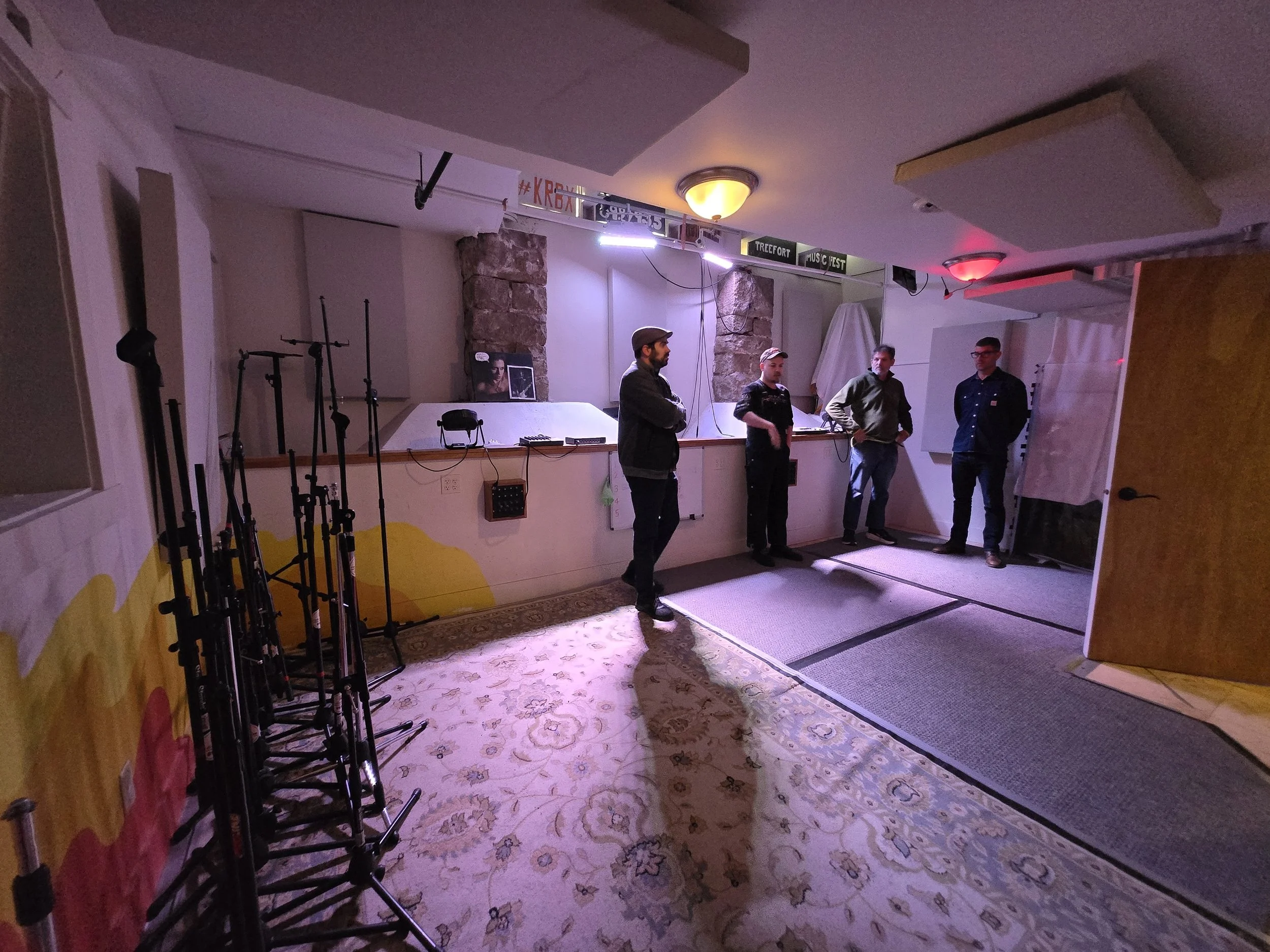
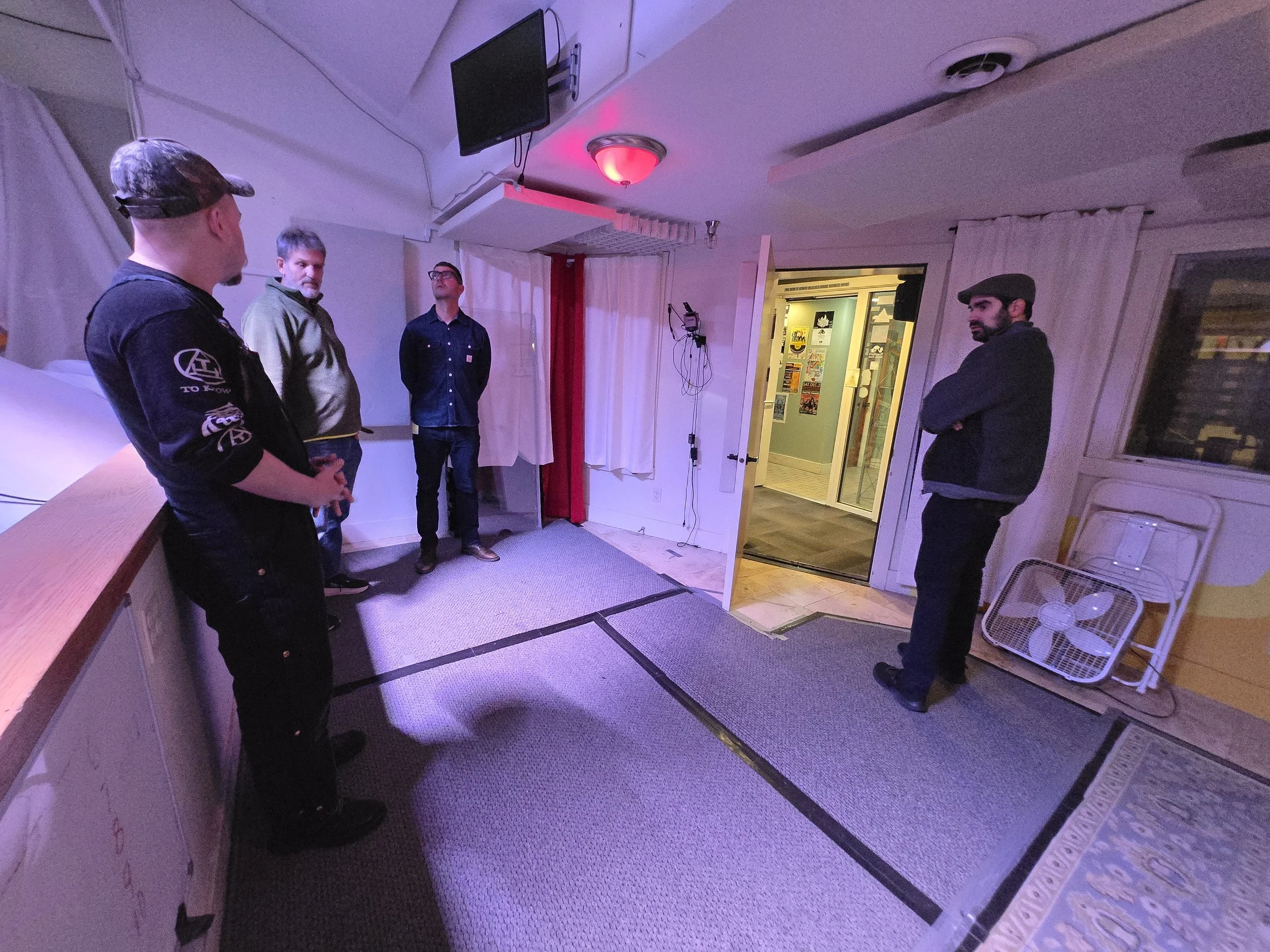
The Scout gave me a much-needed understanding of the space and the challenges we as a crew would face.
● Challenge #1 - small space
● Challenge #2 - Bland wall color except in the corner
● Challenge #3 - big windows that will get in the way of hosts.
● Challenge #4 - Camera Placement
So with these challenges in mind, I built my Game plan.
THE GAME PLAN
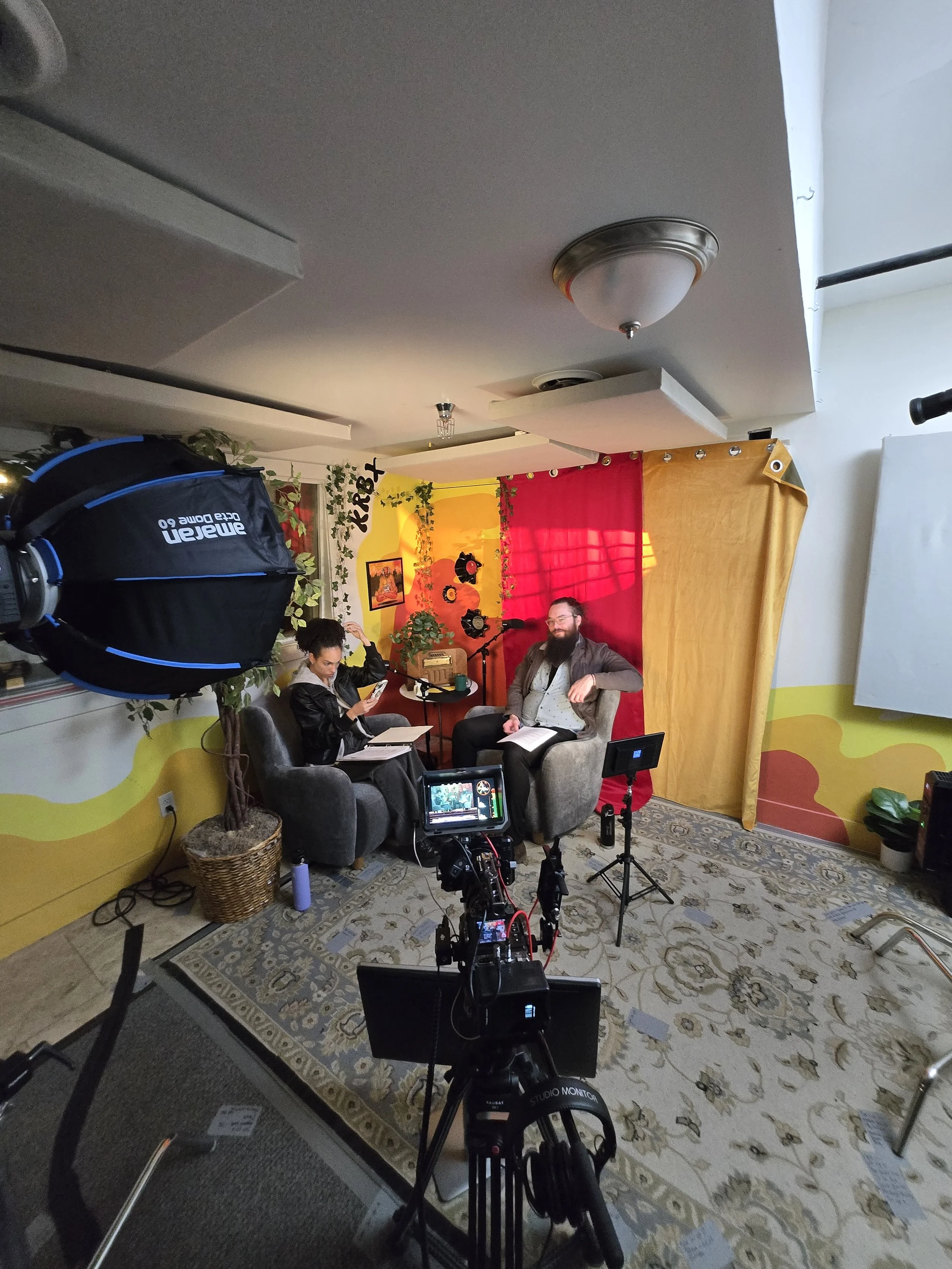
Since the space was small, I decided to move the producer’s station to a separate location, making the area more manageable for just two people. The second challenge, which I solved with the help of our production designer, Amanda, was the bland wall color. We chose to shoot in the corner that already had color to avoid plain white walls; this locked Amanda into a specific color palette, so we leaned into it, creating the 'cozy' look we eventually achieved. The third issue involved the windows: one window was where the radio broadcast actually takes place, so we kept it, but Amanda covered the smaller window with two curtains she had on hand. Finally, to optimize camera placement, we decided not to shoot directly into the corner. Instead, we angled the camera slightly to the right to provide more depth for wide shots. To finalize the layout, Amanda and I rebuilt the set in the Play Studio to determine the best chair placement and decide if the middle table should be in front of or behind the hosts.
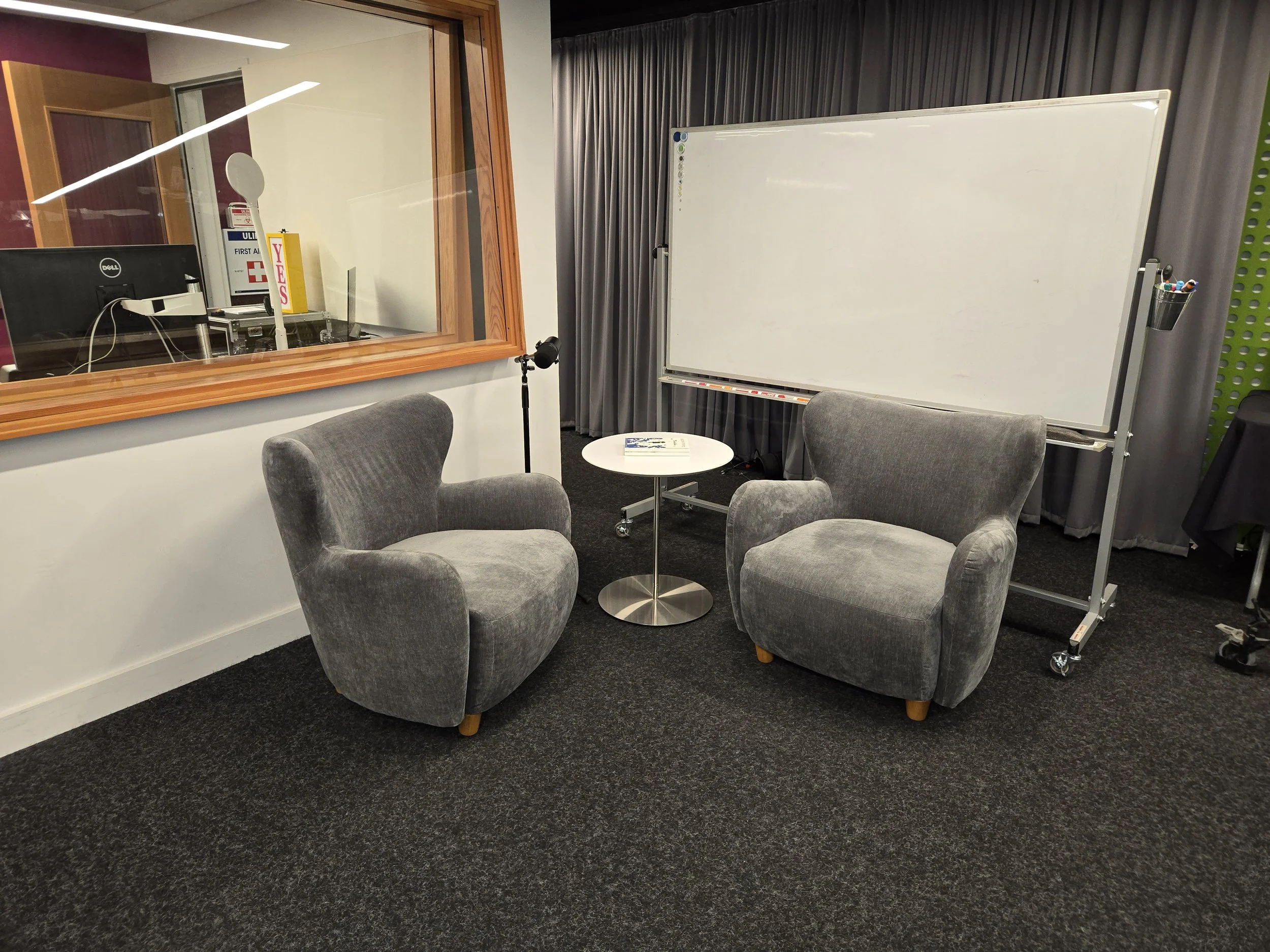
A re-creation of the Radio Boise space in the Play Studio at JUMP.
From here we decided that the 2 chairs like this will fit and would look better with the table being tucked into the corner, with mics on each side to sell the idea that they are podcasting, even though this is an educational video on how to podcast.
LIGHTING SET UP AND FINAL LOOK CREATION
With most of the visual style established, all that remained was to set up the lighting and finalize the look before filming. By this time, Amanda had fully determined how she wanted the set to look. On the Friday before the shoot, we conducted our final tests and adjusted the lighting to my specifications.
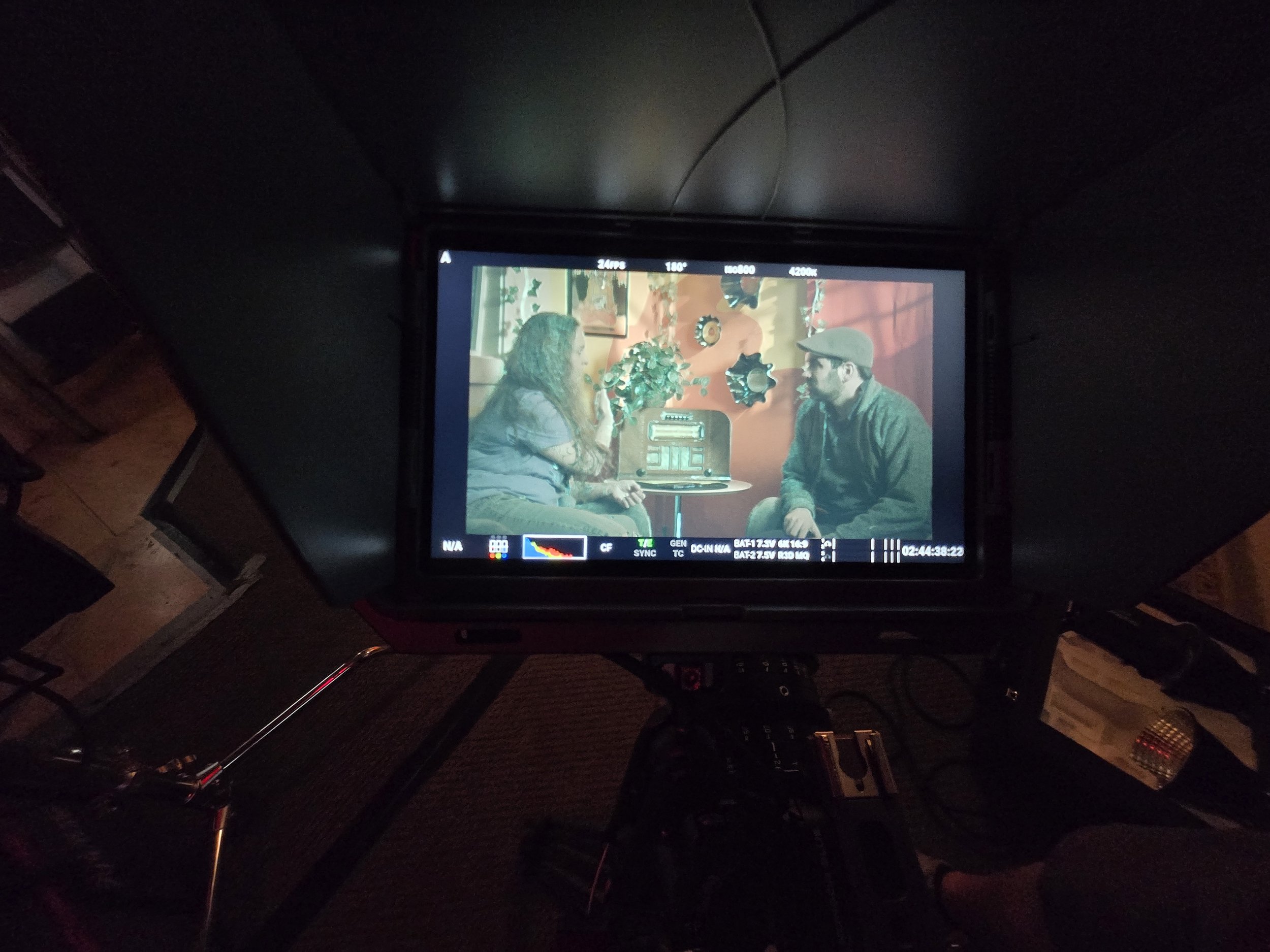
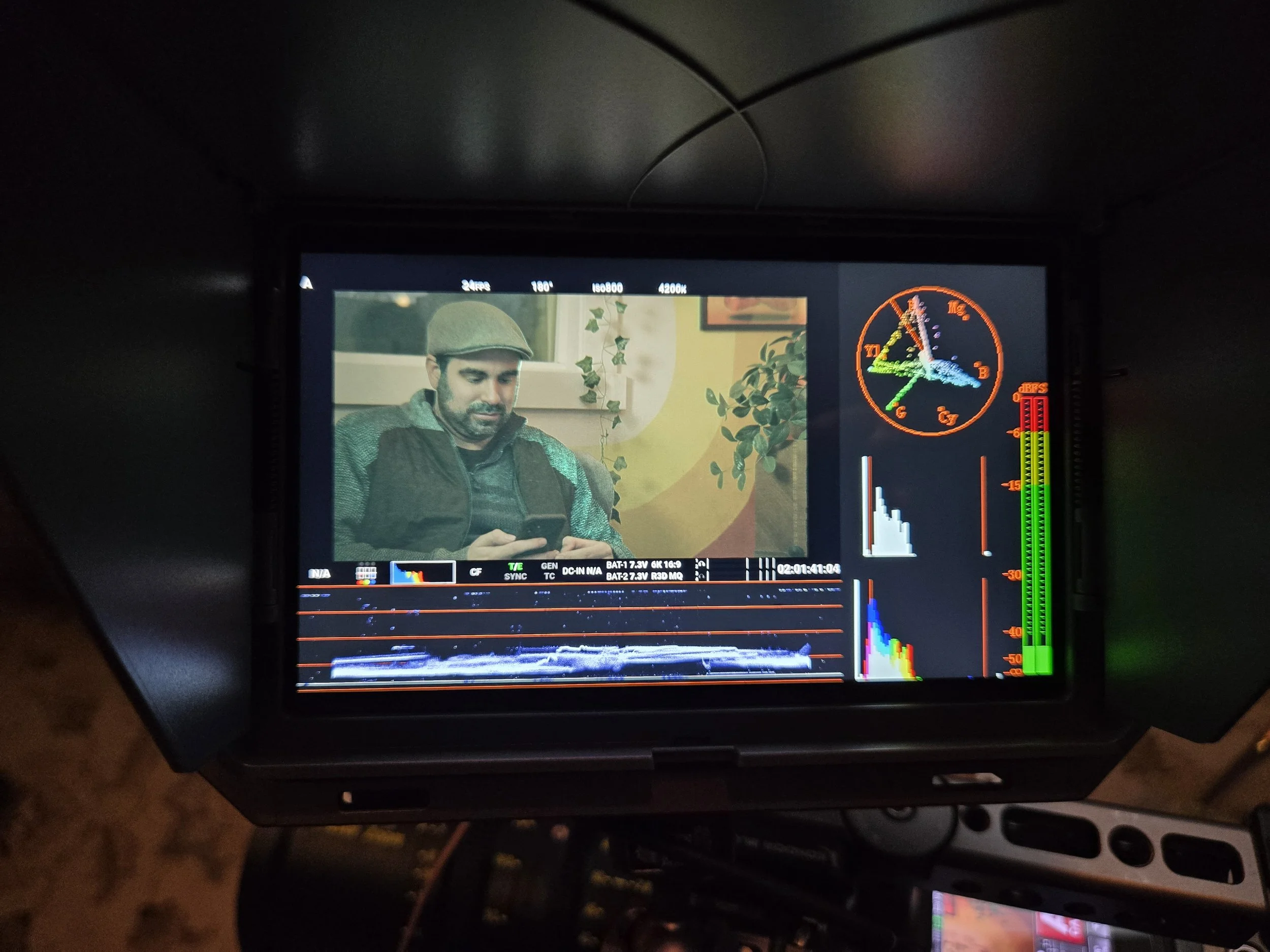
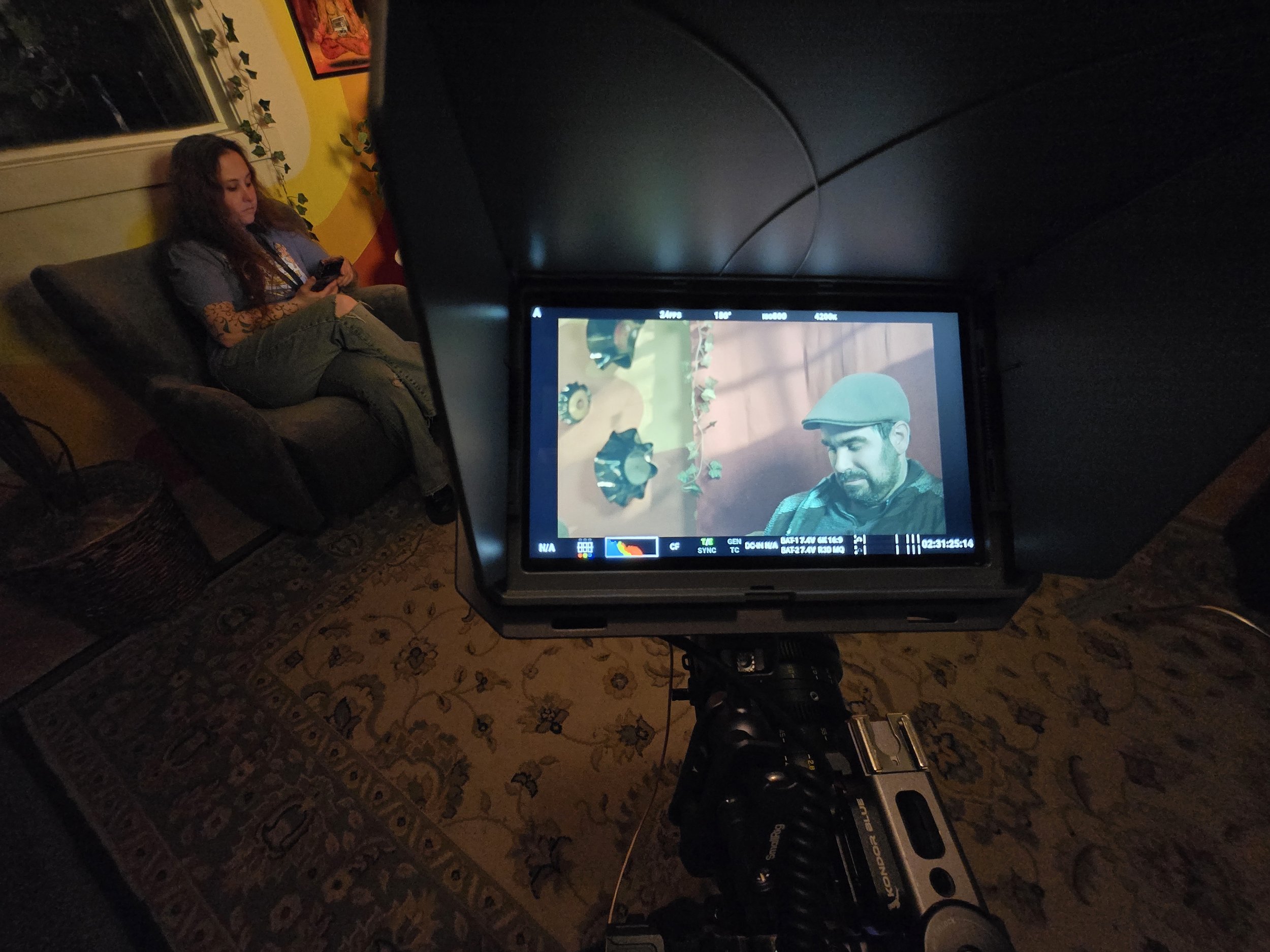
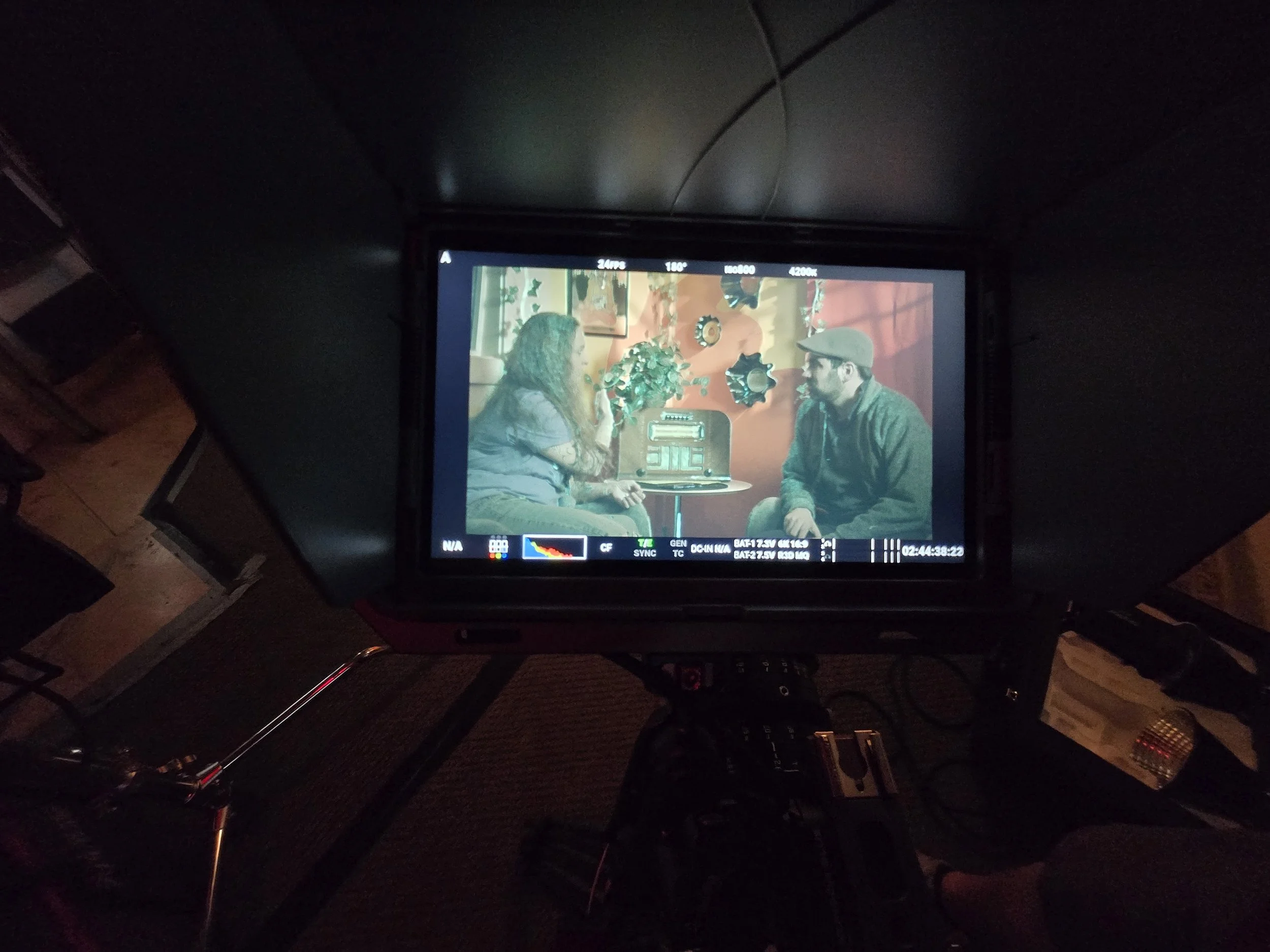
A test set up of the medium wide shot for the shoot
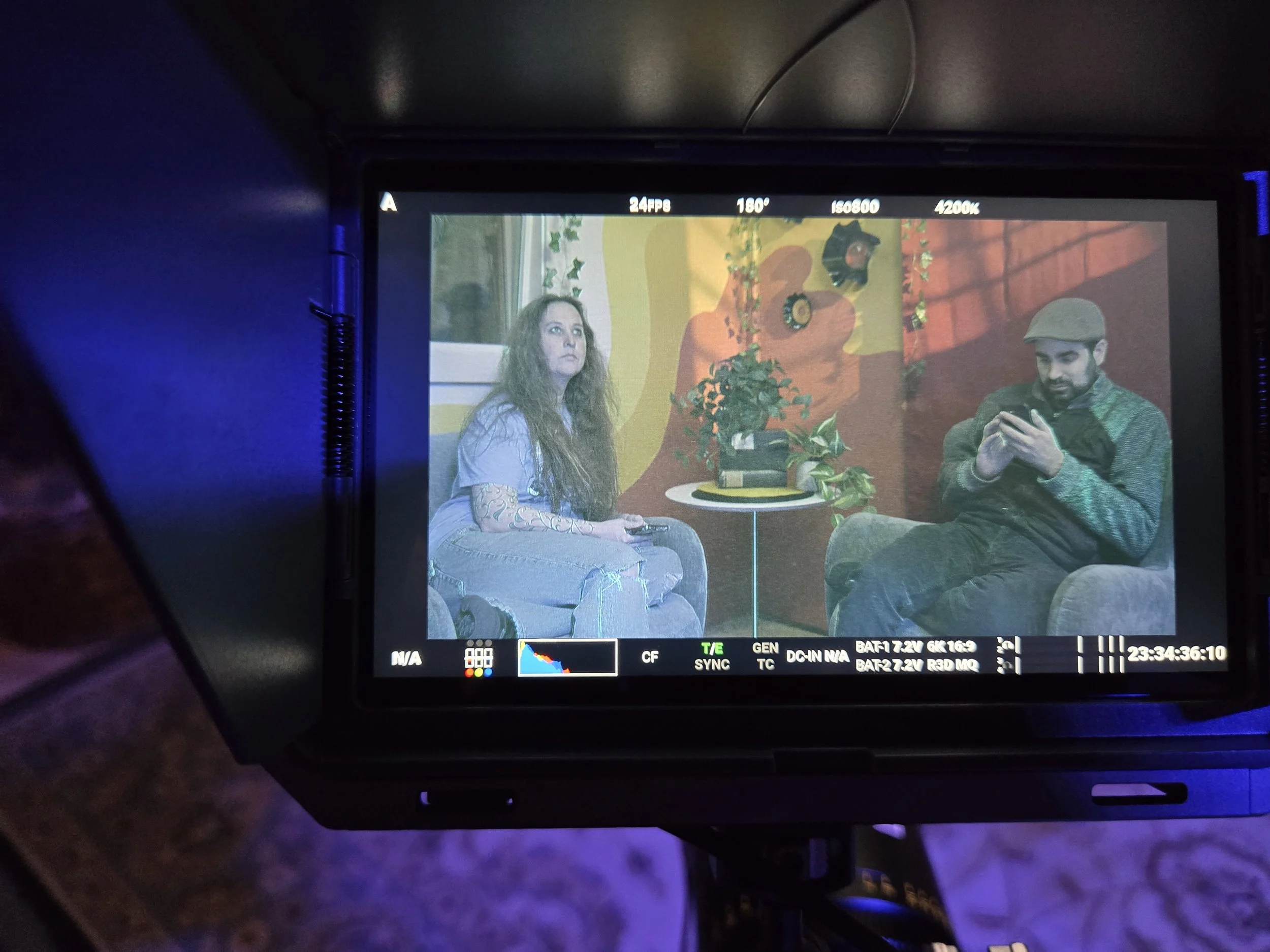
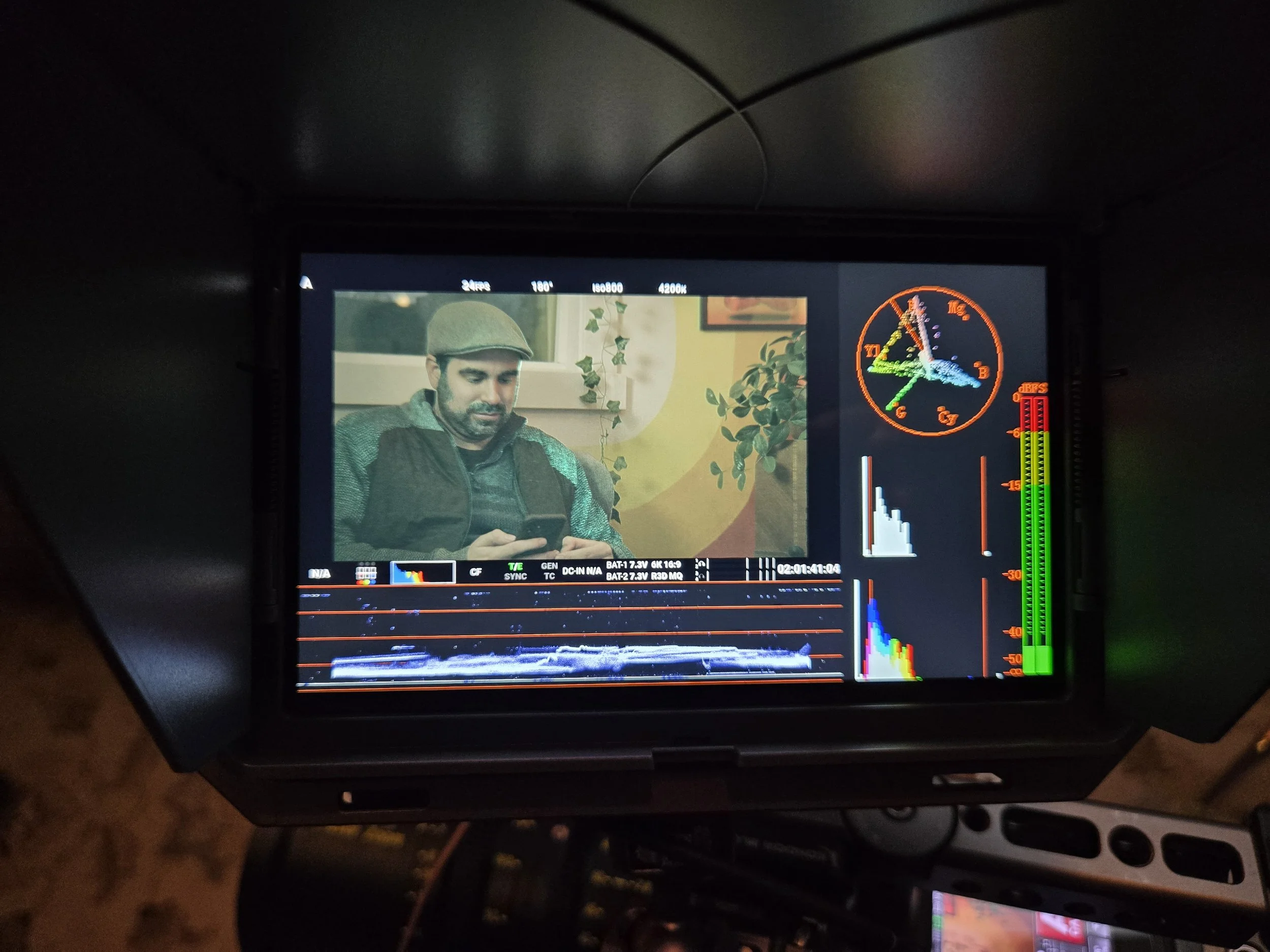
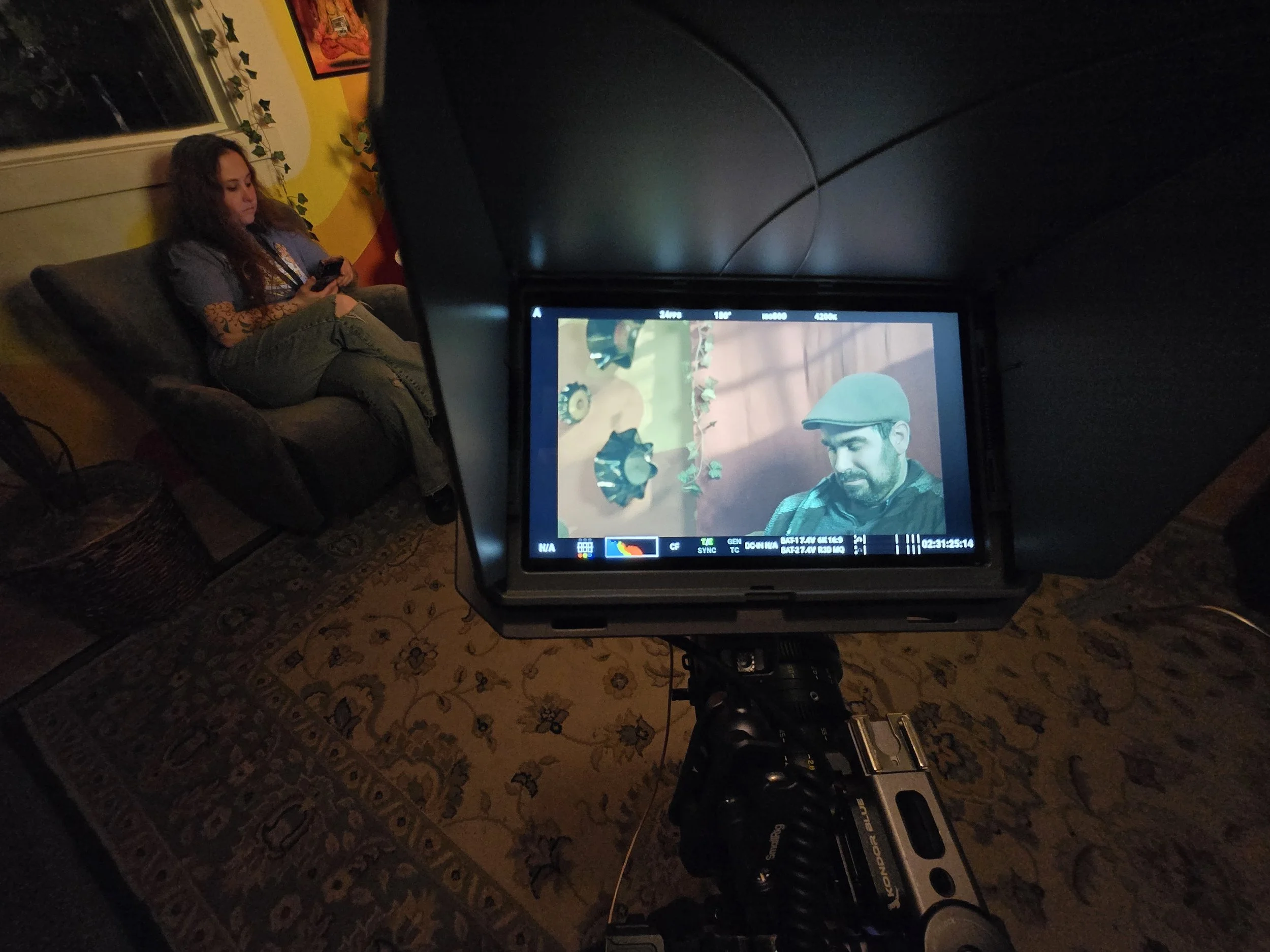
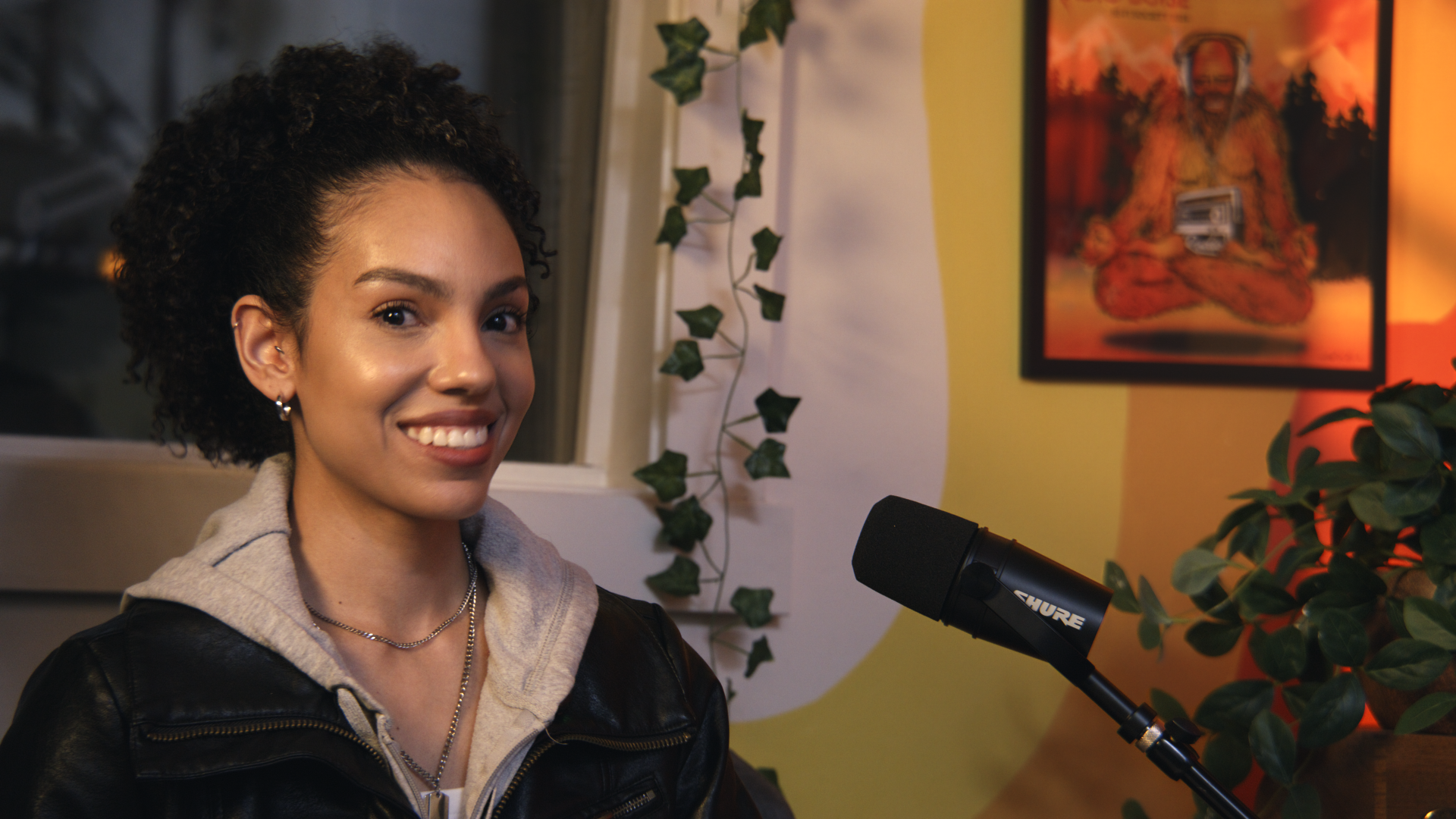
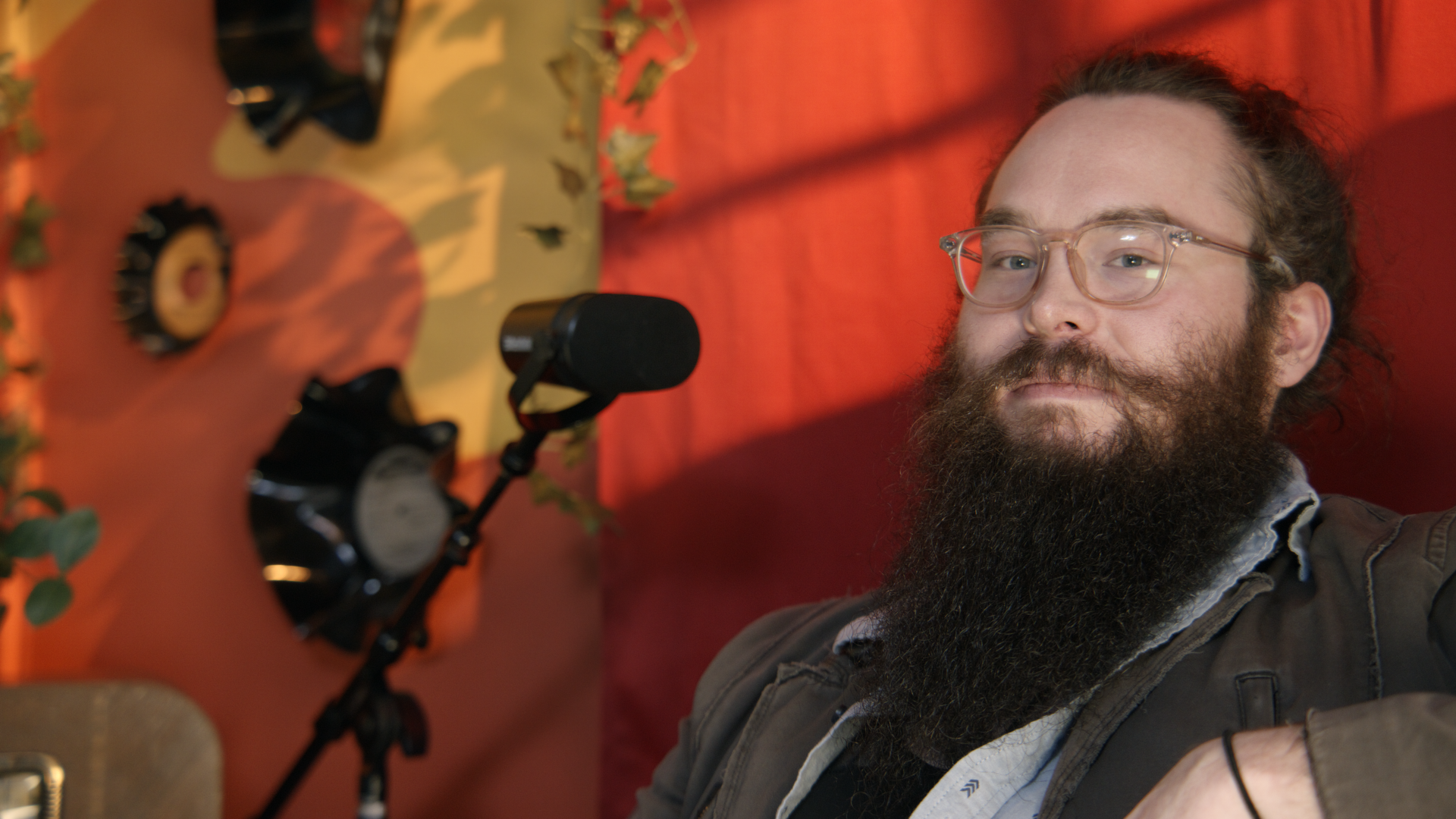
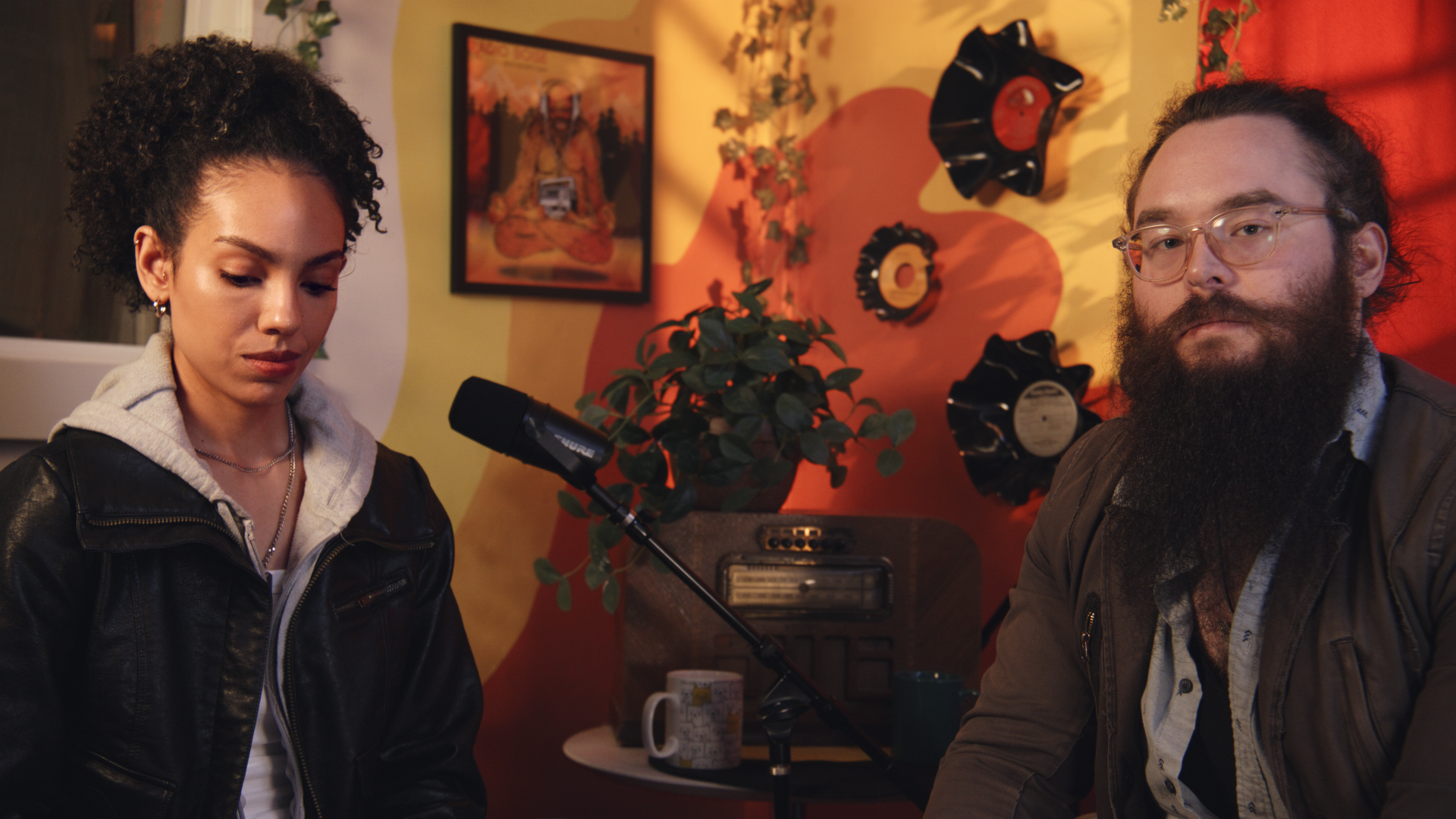
During the lighting setup, I planned to use a spotlight with a gobo to create a 'false window.' This helped maintain the 'comfy' look while adding much-needed texture to the wall behind Host #2, which was looking a bit too flat. The challenge I encountered was that the light had to be placed at a precise angle so it wouldn't hit the host and cause his head to cast a shadow. On the day of filming, we had to adjust the host's position multiple times to avoid this issue. This was the process of how we built the look for Radio Boise. Below are the final images from the shoot
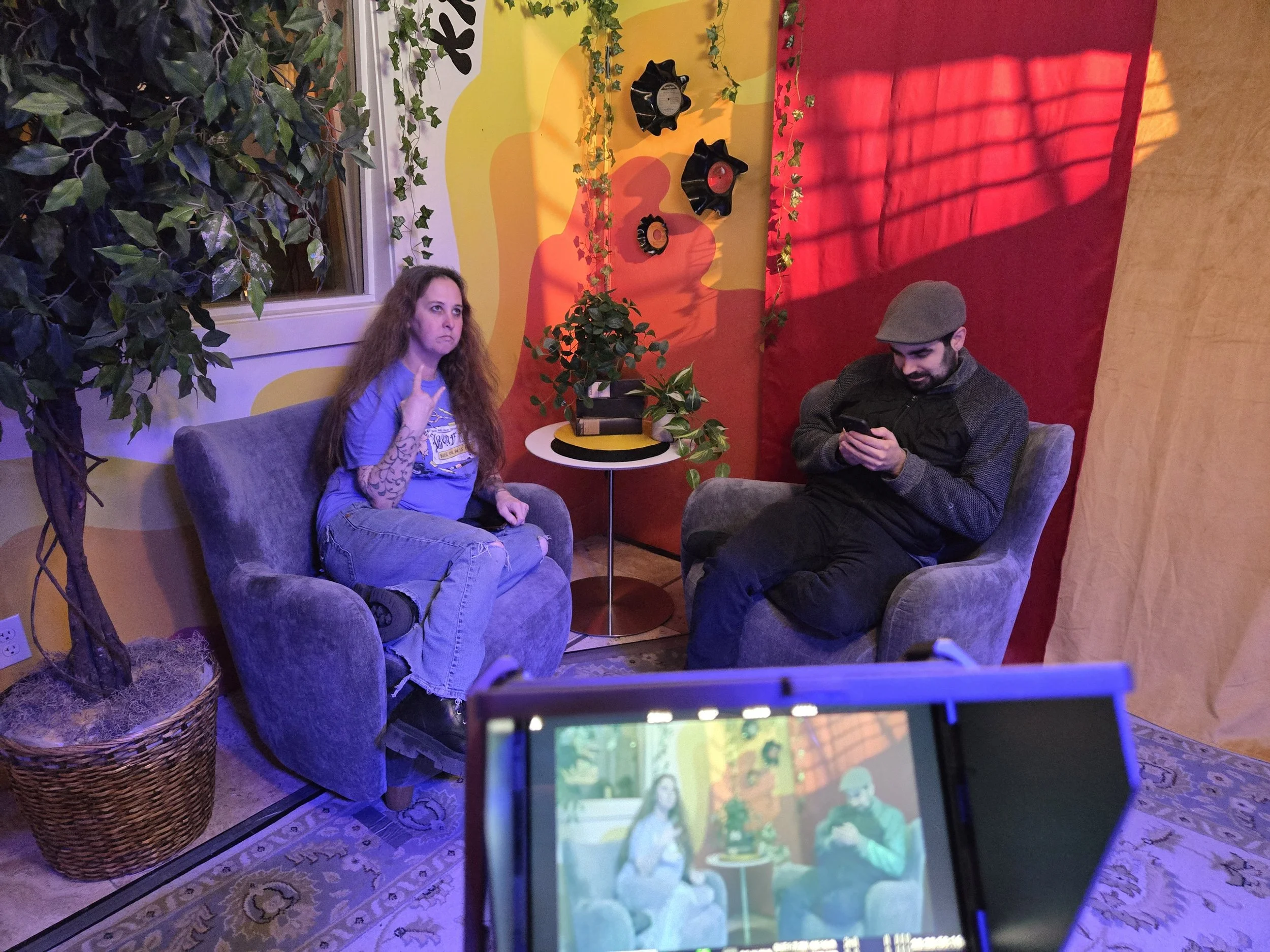
HERE ARE THE FINAL SHOTS SIDE BY SIDE WITH THE TEST SHOTS
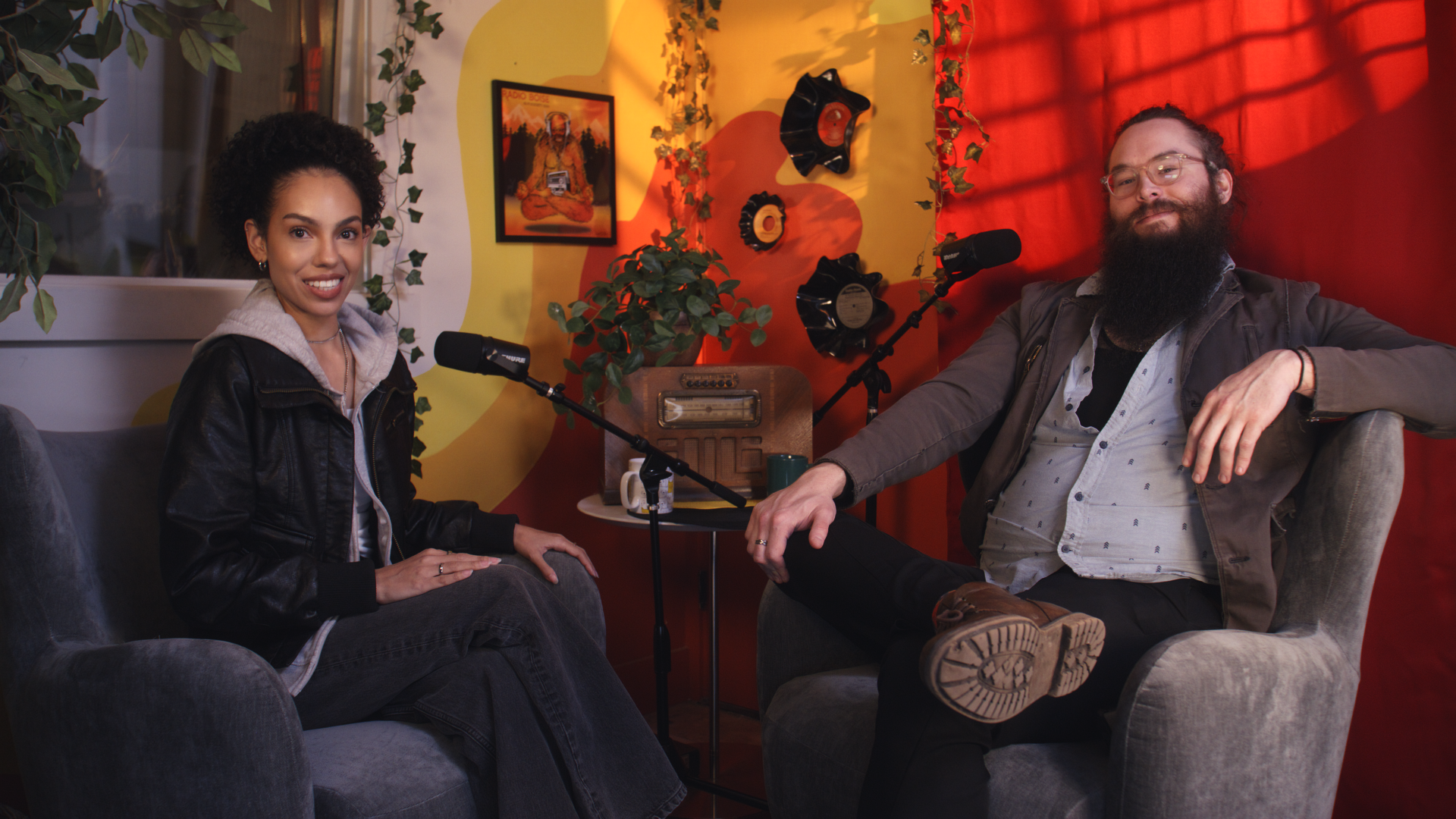
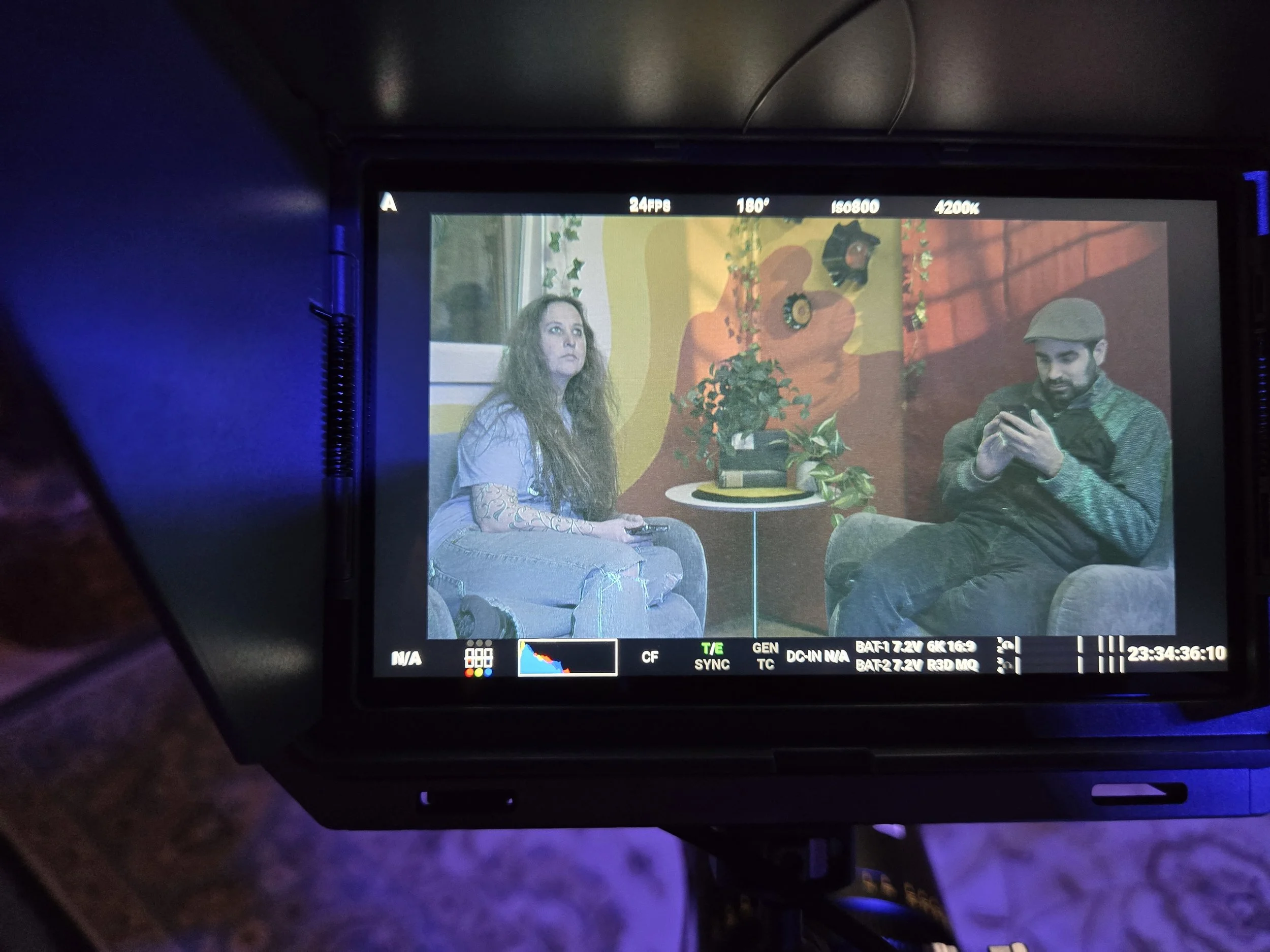
Before the transformation
After
